ServicesWater Softeners
Water Softeners in Mesquite, Fitted to the Pipes You Have
Hard minerals build up on taps, cloud your glassware and settle in the bottom of the water heater. We size a softener to your water and your household, then connect it to the plumbing in your home, including the patched and outdated sections that decades of repairs leave behind.
What a Softener Does, and When It's Worth It
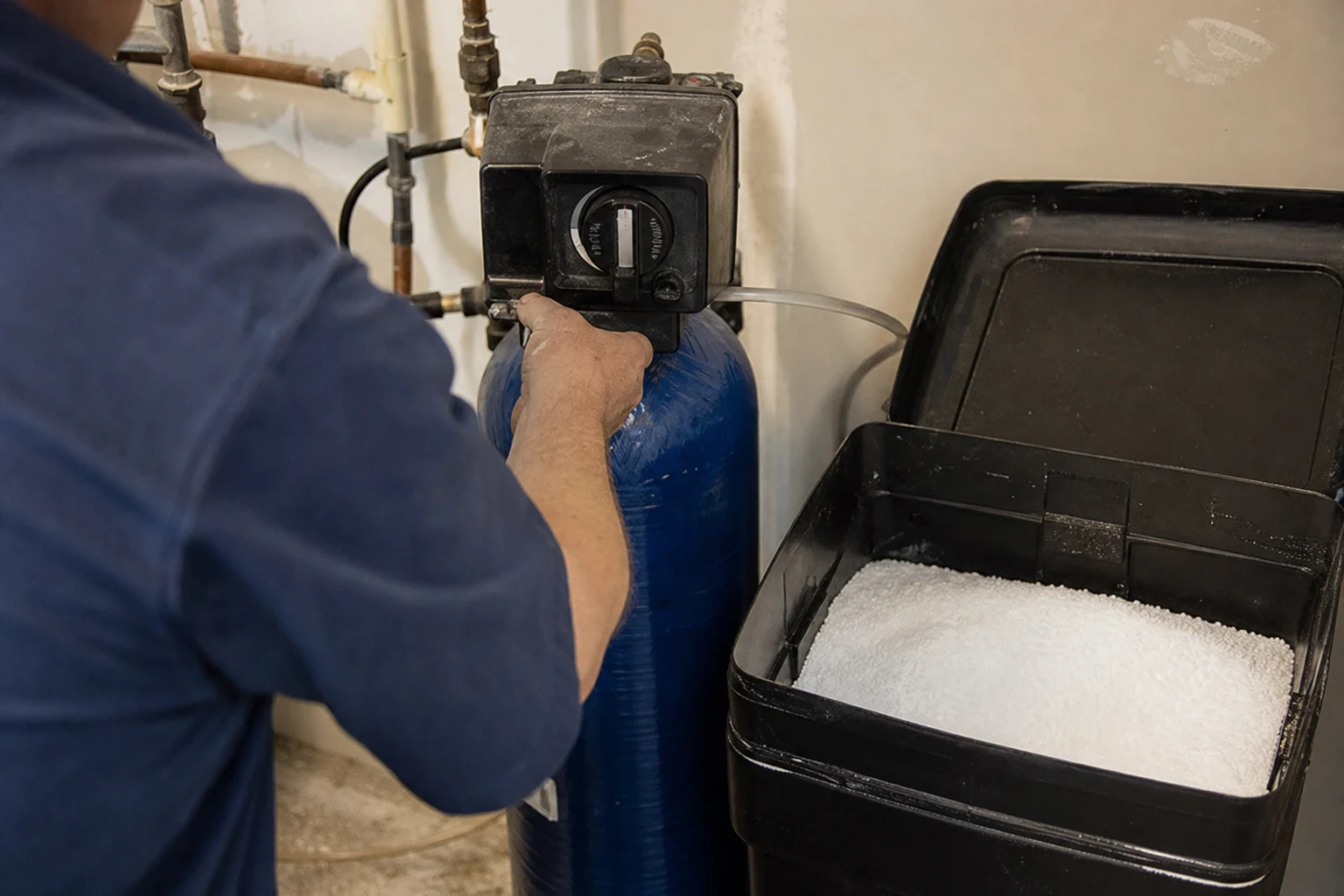
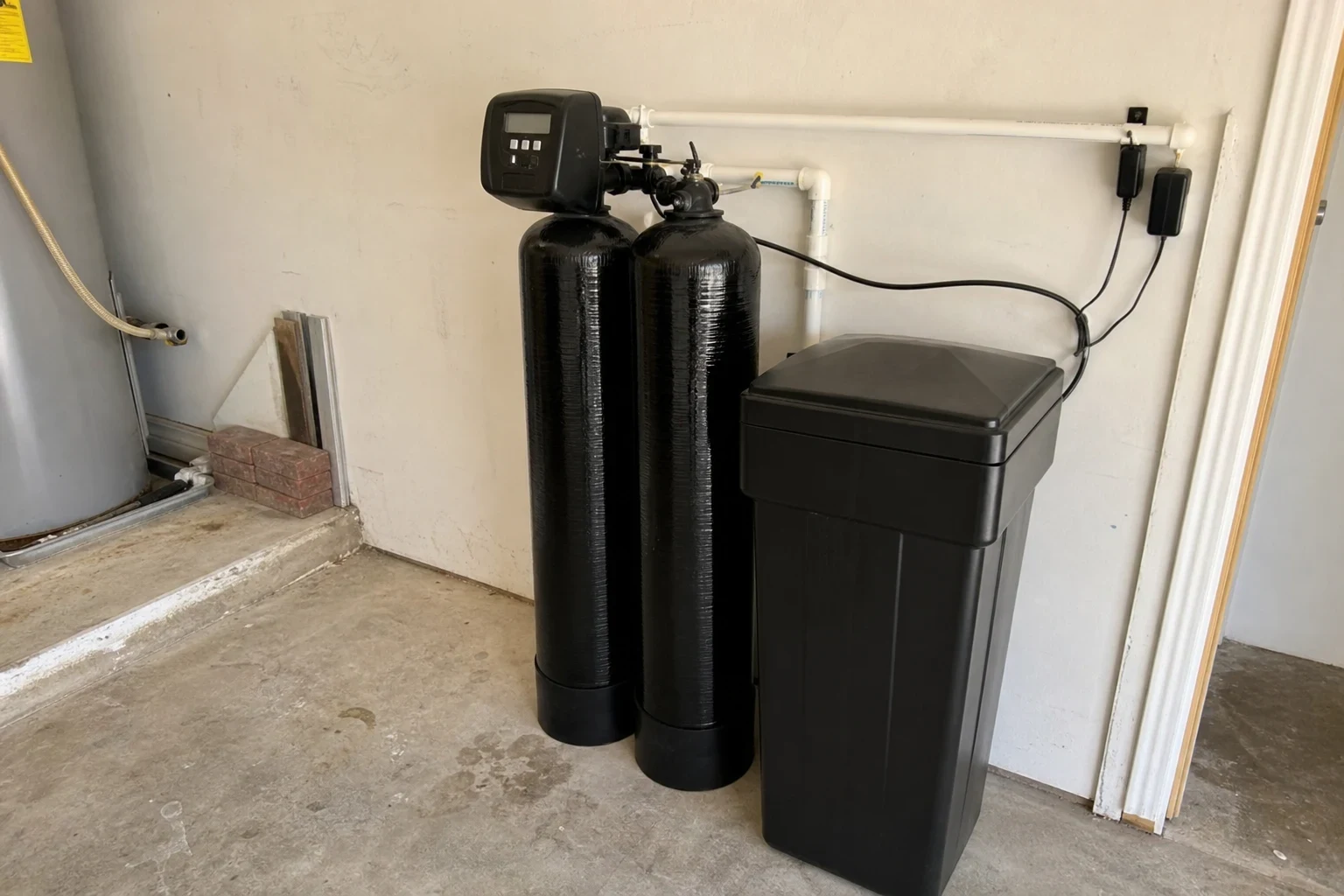
A water softener pulls calcium and magnesium out of your water as it runs through a tank of resin beads. Those minerals are what build scale in pipes, fixtures and appliances. When the resin fills up, the unit rinses itself with brine and starts over.
Not every house needs one. Hardness changes from one supply to the next, and a softener is only worth buying when the mineral level is high enough to leave real buildup. So we check first. A water test gives us a hardness number. If that number doesn't call for a softener, we'll say so, and point you to whole-home filtration or reverse osmosis if those fit your problem better.
In older homes the bigger job is often the plumbing, not the softener. We look at where your main line comes in, what it's made of and what past repairs left behind before we quote anything.
What the Install Includes
Sizing to your water
We pick grain capacity from your hardness and how much water your household uses. Too small and it regenerates constantly. Too big and it wastes salt and the resin doesn't get used evenly.
Tie-in to your main line
Older houses often have galvanized steel or copper, sometimes mixed with PEX from an old repair. We use proper transition fittings so different metals don't corrode where they meet. The plumbing work is handled by subcontracted master-licensed plumbers.
A bypass valve
A bypass lets water flow around the softener when it needs service, so your home never loses water just because the unit is down.
Drain line with an air gap
The brine rinse needs somewhere to go. We run it to a proper drain with an air gap so wastewater can't siphon back into your supply.
Setup and a short walkthrough
We set the hardness and regeneration time, load the first salt and show you where to check the level. Then we clean up and haul off the packaging.
Signs You May Need a Softener
Scale that keeps coming back
A pale, gritty ring forms around faucet bases and clogs the little holes in the showerhead. You scrub it off and it's back in a few weeks.
Cloudy glasses, scratchy towels
The dishwasher leaves a haze on glassware. Towels dry stiff even when you add extra detergent.
A rumbling water heater
Popping or rumbling at the bottom of the tank usually means sediment and scale have settled there. That layer makes the heater work harder for the same hot water.
Suds that disappear fast
Minerals tie up soap before it can foam. You go through bottles of shampoo and dish liquid quicker, and a dull film stays on the tub and on your skin.
Weak pressure in an old house
Scale can narrow lines over time. But in aging galvanized pipe, rust is often the real cause, and a softener won't fix that. We'll tell you which one you're dealing with.
How the Job Goes
- 1
Phone call
We ask how old the house is, how many people live there and where your water heater and main shutoff sit. That tells us what to look for.
- 2
Test and look around
We check your hardness and look at the pipe where the softener would go. We note any old repairs, mixed materials or a missing softener loop.
- 3
Written quote
You get the unit, the plumbing work and anything extra listed out. If your house needs a pipe section replaced to do it right, you'll see that before we start.
- 4
Install day
Your water is off for part of the visit while the plumber ties in. We protect the floor, test for leaks under pressure and run a first regeneration.
- 5
Settings, salt and follow-up
We go over settings and salt with you before we leave. If a defect related to the installation turns up, our 1-year workmanship warranty covers it.
What Moves the Price
Most of the cost difference between two houses is the plumbing, not the softener. A newer house with a loop already in the garage is a quick tie-in. A house built before loops were common may need new pipe, a drain run and an outlet. Standard professional installation included for qualifying homes; ask about it when you phone and we'll check your setup against it during the visit.
- Grain count and daily use
- The more minerals per gallon, and the busier the house, the bigger the tank and resin bed we have to put in.
- Your pipe material and condition
- Old galvanized lines or a patchwork of past repairs can mean replacing a section before we connect. We show you what we found.
- Loop or no loop
- Plenty of houses were built without a softener loop. Adding one, or routing to the main line inside, adds labor.
- Drain and power access
- The softener needs a drain nearby and usually an outlet. A long run to either adds time and parts.
Softener Questions We Hear
Something not covered here? (972) 947-9421
Will softened water taste salty?
Most people don't notice a taste. The sodium a softener adds goes up or down with how hard your water started out. Potassium chloride pellets work in the same tank if you want to skip sodium. A reverse osmosis faucet at the kitchen sink also strips it out of your drinking and cooking water.
My house is older and has no softener loop. Can you still put one in?
Yes. We find the best spot on your main line, often near where it enters the house, and the plumber cuts in from there. It's more work than a ready loop, and the quote will show that.
How often do I add salt?
It depends on your hardness and water use, but many households top it off every month or two. Keep the tank at least a quarter full. We'll show you what that looks like.
Does a softener remove chlorine or other contaminants?
No. A softener only handles hardness minerals. For chlorine taste and odor, whole-home filtration is the right tool. For drinking water, reverse osmosis does more.
What if something goes wrong after the install?
Call us and tell us what you're seeing. For the first year, our workmanship warranty covers defects tied to the installation, like a fitting that weeps or a drain line that wasn't set right. We'll come back out and fix it.
Find Out if a Softener Fits Your Home
Tell us about your house and your water. We'll check the hardness, look at your plumbing and give you a straight quote, or tell you a softener isn't worth it.